How to Reuse Ingredients Across Multiple Meals
Reusing ingredients across multiple meals is not about frugality alone. It is about continuity. It is about allowing food to live more than once. It is about letting your kitchen feel like a system instead of a series of disconnected events. When ingredients move across meals, planning becomes calmer, cooking becomes lighter, and food stops feeling like a constant restart.
Most cooking stress comes from the idea that every meal must begin from nothing. New ingredients. New decisions. New effort. Reusing ingredients breaks that cycle. It replaces beginnings with continuation. And continuation is always easier than creation.
The first step is to stop thinking in dishes and start thinking in components. Rice is not a meal. It is a base. Beans are not a dish. They are a building block. Roasted vegetables are not an ending. They are a beginning. When you see ingredients as flexible pieces instead of fixed outcomes, reuse becomes natural.
A pot of rice can become a bowl, a side, a soup base, or a breakfast porridge. Cooked beans can become stew, spread, filling, or topping. Roasted vegetables can become wraps, pasta additions, soups, or grain bowls. One ingredient, many lives.
This way of cooking does not require creativity. It requires permission.
Permission to repeat.
Permission to remix.
Permission to continue.
Reusing ingredients also reduces emotional effort. You are not deciding what to cook from scratch. You are deciding how to continue something that already exists. That decision feels lighter.
Another important shift is cooking neutrally. When you prepare ingredients with simple seasoning, they travel more easily. Plain rice adapts to any flavor. Simply cooked lentils accept any spice. Neutral roasted vegetables fit many directions. Neutrality creates mobility.
Mobility is what makes reuse possible.
Reusing ingredients also teaches you to cook in layers. You do not cook meals. You cook foundations. Then you build meals from them. A foundation meal does not need to be impressive. It needs to be cooperative.
For example, a pot of lentils can become lentil soup one night. The next day, the same lentils can be mashed into a spread. The day after, they can be added to a grain bowl. Nothing is wasted. Everything evolves.
This evolution creates rhythm in your kitchen. Food stops feeling static. It starts feeling alive.
Another benefit of ingredient reuse is reduced waste. When you plan to reuse, you are more likely to finish what you cook. Leftovers stop being accidental. They become intentional.
A container in the fridge becomes a resource, not a reminder.
Reusing ingredients also makes shopping easier. You buy fewer items with more purpose. You stop collecting ingredients for single-use recipes. You start buying ingredients that can travel across meals. This makes your pantry and fridge feel more supportive.
Your kitchen begins to feel like a toolkit instead of a storage space.
Another important part of reuse is changing how you see leftovers. Leftovers are not failed meals. They are ingredients waiting for their next role. When you treat leftovers as beginnings instead of endings, your relationship with them changes completely.
Leftover rice becomes fried rice or soup.
Leftover vegetables become wraps or pasta.
Leftover beans become spreads or bowls.
Nothing is stuck.
Reusing ingredients also reduces cooking fatigue. You are not always chopping, boiling, roasting, and cleaning. You do some work once and benefit from it multiple times. This makes cooking feel more sustainable.
Sustainability is not only environmental. It is emotional.
Another helpful practice is choosing one or two ingredients each week to be your anchors. Maybe it is rice and beans. Maybe it is pasta and roasted vegetables. Maybe it is lentils and potatoes. These anchors appear in several meals. They create cohesion.
Cohesion reduces stress.
Reusing ingredients also allows you to eat more intuitively. You do not feel locked into a plan. You respond to what is available. You look at what you have and ask what it can become today. That question feels open instead of demanding.
Another benefit is time. When ingredients are already cooked, meals assemble faster. Bowls, wraps, plates, and soups come together with minimal effort. Dinner stops feeling like a project.
Reusing ingredients also encourages creativity without pressure. You are not inventing from nothing. You are adjusting something that already exists. That adjustment feels playful instead of intimidating.
A spoon of sauce changes a meal.
A pinch of spice changes a mood.
A splash of acid changes direction.
Small changes, big difference.
Another important element is learning which ingredients reuse well. Grains, legumes, roasted vegetables, cooked proteins, sauces, and soups all adapt beautifully. Ingredients that hold structure are especially good for reuse.
Soft foods become spreads.
Firm foods become fillings.
Liquids become bases.
Understanding this makes planning easier.
Reusing ingredients also builds confidence. You realize that you do not need constant new ideas to eat well. You only need a few good ingredients and the willingness to let them move.
Confidence makes cooking calmer.
Another quiet benefit is emotional satisfaction. There is something deeply grounding about finishing what you started. About honoring food through its full journey. About seeing continuity instead of interruption.
Reusing ingredients also supports smaller households especially well. Cooking once and eating many ways prevents waste and boredom. It allows variety without excess.
For families, reuse reduces workload. For individuals, it reduces effort. For everyone, it reduces pressure.
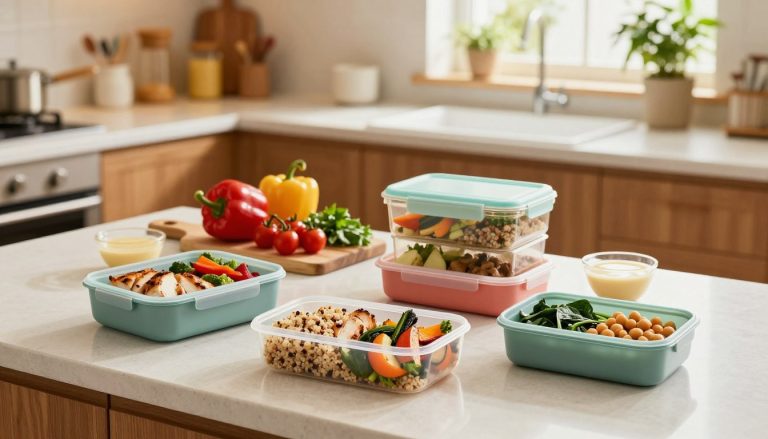
Another helpful practice is storing ingredients in visible, usable ways. Clear containers. Simple labels. Easy access. Visibility encourages reuse. When you see ingredients, you remember them.
Out of sight often becomes out of use.
Reusing ingredients also changes how you experience planning. You stop planning meals. You start planning movements. You plan how rice will travel. How beans will evolve. How vegetables will shift. Planning becomes more fluid.
Fluid planning feels lighter.
Another important part of reuse is letting go of the idea that meals must look complete. A bowl of rice with sauce is a meal. Bread with spread is a meal. Soup with toast is a meal. Completion is not about variety. It is about satisfaction.
Reusing ingredients also supports emotional eating in a healthy way. When food is familiar, you are less likely to overeat from novelty. You eat until satisfied, not until stimulated.
Familiarity calms the nervous system.
Another benefit is consistency. When ingredients repeat, your body learns what to expect. Digestion improves. Satisfaction becomes steadier. Food feels more supportive.
Reusing ingredients also allows gentle exploration. You can try one new flavor on a familiar base. One new sauce on the same grain. One new spice on the same vegetables. This keeps food interesting without overwhelming you.
Small experiments feel safe.
Another quiet advantage is financial. Buying ingredients that you know how to reuse reduces waste and impulsive spending. Your grocery list becomes shorter. Your kitchen becomes fuller in meaning, not in clutter.
Reusing ingredients also teaches respect for food. You see its potential. You see its patience. You see its ability to become more than once.
Food stops being disposable.
It becomes a partner.
Another important shift is understanding that reuse does not mean repetition of the same meal. It means repetition of the same ingredient in new contexts. This distinction prevents boredom.
Rice is the same.
The meal is different.
That difference matters.
Reusing ingredients also supports emotional resilience. When life is busy or unpredictable, having ready components makes eating possible without stress. You are not starting from zero. You are continuing from somewhere.
Continuation feels safe.
Another helpful practice is ending meals with intention. You leave space. You save portions. You think about what something might become tomorrow. This small awareness turns cooking into a gentle cycle instead of a hard stop.
Reusing ingredients across multiple meals is not about being efficient.
It is about being kind to your future self.
It is about choosing ease over reinvention.
It is about letting food support you more than once.
It is about building a kitchen that works with you instead of against you.
When ingredients are allowed to move, meals stop feeling heavy.
When meals stop feeling heavy, cooking becomes possible again.
And when cooking becomes possible, eating becomes gentler.
Reusing ingredients is not a trick.
It is a relationship.
Between you and what you already have.
And in that relationship, food finally gets to finish its story.
More than once.