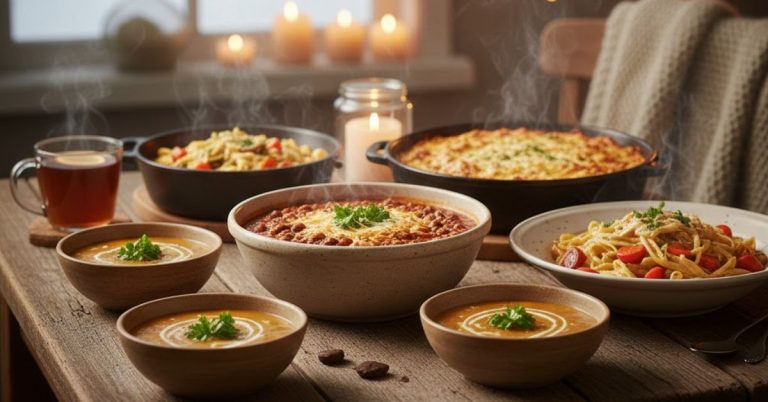
A well-planned Winter Pantry Cooking Guide can transform the way you cook during the colder months. When winter arrives, grocery trips feel harder, fresh produce can be limited, and comfort becomes a priority. Fortunately, a thoughtfully stocked pantry allows you to prepare warm, filling meals without relying on frequent shopping or complicated recipes. From soups and stews to casseroles and one-pot dishes, pantry cooking helps you stay nourished, organized, and stress-free all winter long.
Moreover, winter pantry cooking is about working smarter, not harder. By learning how to combine shelf-stable ingredients with a few fresh or frozen items, you can create meals that are comforting, affordable, and deeply satisfying. This guide will walk you through essential pantry staples, smart meal ideas, cooking techniques, and practical tips to help you make the most of your kitchen throughout the winter season.
What Is Winter Pantry Cooking?
Winter pantry cooking focuses on using shelf-stable foods, frozen ingredients, and long-lasting produce to prepare meals during colder months. Instead of relying heavily on fresh ingredients that spoil quickly, pantry cooking emphasizes flexibility, planning, and creativity.
In winter, this approach becomes especially valuable. For example, bad weather, busy schedules, or limited daylight can make frequent grocery shopping inconvenient. As a result, having a reliable pantry means you can cook nourishing meals anytime without stress.
Why a Winter Pantry Cooking Guide Is Essential
A structured Winter Pantry Cooking Guide provides clarity and confidence in the kitchen.
Saves Time and Energy
First, pantry cooking reduces decision fatigue. When ingredients are already on hand, meal planning becomes simpler and faster.
Supports Budget-Friendly Cooking
In addition, pantry staples are often more affordable and have a longer shelf life, helping reduce food waste and grocery expenses.
Encourages Comfort and Nourishment
Finally, pantry meals are ideal for winter comfort foods like soups, stews, and casseroles that keep you full and warm.
Essential Pantry Staples for Winter Cooking
A strong pantry is the foundation of successful winter meals.
Grains and Starches
- Rice (white, brown, jasmine)
- Pasta (short and long varieties)
- Quinoa, oats, barley
- Potatoes and sweet potatoes
These ingredients are filling, versatile, and pair well with almost anything.
Beans, Lentils, and Legumes
- Canned or dried beans
- Lentils (red, green, brown)
- Chickpeas
Because they are rich in protein and fiber, legumes are excellent for winter meals.
Canned and Jarred Goods
- Tomatoes (diced, crushed, paste)
- Broth or stock
- Coconut milk
- Sauces and condiments
These items add depth and flavor to pantry-based dishes.
Cooking Oils, Herbs, and Spices
- Olive oil, vegetable oil
- Garlic powder, onion powder
- Paprika, cumin, thyme, bay leaves
Spices play a crucial role in transforming simple pantry meals into flavorful dishes.
Refrigerator and Freezer Support Ingredients
Although pantry cooking focuses on shelf-stable items, a few refrigerator and freezer staples enhance flexibility.
Refrigerator Basics
- Onions and garlic
- Carrots and celery
- Eggs and cheese
Freezer Essentials
- Frozen vegetables
- Frozen fruits
- Frozen cooked grains or proteins
Together, these ingredients help round out meals without requiring constant shopping.
Easy Winter Pantry Meals to Make
One of the main goals of a Winter Pantry Cooking Guide is simplicity.
Pantry Soups
Soups are a staple of winter pantry cooking.
Examples include:
- Lentil soup
- Bean and vegetable soup
- Tomato soup
Simply combine broth, canned beans, spices, and frozen vegetables for an easy meal.
Pantry Stews
Stews are heartier than soups and ideal for cold days.
Use:
- Potatoes or grains
- Beans or canned meat
- Tomato base or broth
Allowing the stew to simmer slowly builds rich flavor.
One-Pot Pantry Meals
One-pot meals save time and cleanup.
Popular options:
- Rice and beans
- Pasta with canned tomatoes
- Skillet grain bowls
As a result, these meals are ideal for busy winter evenings.
Winter Pantry Comfort Foods
Comfort food is central to winter cooking.
Pantry-Based Pasta Dishes
Pasta is one of the easiest comfort foods.
Examples:
- Pasta with tomato sauce
- Creamy pasta using shelf-stable milk
- Baked pasta casseroles
Rice and Grain Bowls
Grain bowls provide warmth and nourishment.
Add:
- Beans or lentils
- Frozen vegetables
- Simple sauces
Potato-Centered Dishes
Potatoes are affordable, filling, and comforting.
Try:
- Baked potatoes with pantry toppings
- Potato soups
- Potato casseroles
Cooking Techniques for Pantry Meals
Knowing how to cook pantry ingredients makes a big difference.
Layering Flavors
Start with oil, onions, and spices to build flavor before adding liquids.
Simmering Slowly
Slow cooking allows dried ingredients and spices to develop richness.
Using Seasoning Wisely
Because pantry meals can be simple, seasoning is essential. Taste often and adjust gradually.
Meal Planning with a Winter Pantry Cooking Guide
Planning helps maximize pantry efficiency.
Weekly Pantry Meal Planning
Choose:
- 2 soups or stews
- 2 grain or pasta dishes
- 1 leftover-based meal
This balance prevents boredom while using similar ingredients.
Batch Cooking
Batch cooking saves time and energy.
Cook:
- Large pots of soup
- Cooked grains
- Beans or lentils
Then portion and store for the week.
Budget-Friendly Winter Pantry Cooking
Pantry cooking is naturally cost-effective.
Affordable Staples
- Dried beans
- Rice and oats
- Potatoes
Stretching Ingredients
- Add grains to soups
- Combine vegetables with beans
- Repurpose leftovers
Therefore, winter pantry cooking supports both nourishment and savings.
Healthy Winter Pantry Meals
Comfort food can still be healthy.
Balanced Pantry Plates
Include:
- Protein (beans, lentils, eggs)
- Fiber (grains, vegetables)
- Healthy fats (olive oil)
Adding Vegetables
Frozen vegetables are excellent for boosting nutrition in pantry meals.
Vegetarian and Plant-Based Pantry Cooking
Plant-based cooking fits naturally into pantry meals.
Protein Sources
- Lentils
- Beans
- Chickpeas
Meal Ideas
- Lentil chili
- Bean soups
- Vegetable grain bowls
These meals are filling, warm, and satisfying.
Freezer-Friendly Pantry Meals
Freezing pantry meals adds convenience.
Best Meals to Freeze
- Soups
- Stews
- Chili
- Casseroles
Storage Tips
- Cool completely
- Use airtight containers
- Label with dates
Common Pantry Cooking Mistakes
Avoid these errors for better results.
Overlooking Seasoning
Pantry meals need seasoning to shine.
Skipping Planning
Without planning, pantry cooking can feel repetitive.
Overcooking Ingredients
Simmer gently to avoid mushy textures.
Making Winter Pantry Cooking Enjoyable
Pantry cooking doesn’t have to feel limiting.
Rotate Flavors
Use different spice blends to keep meals interesting.
Experiment Gradually
Try small variations instead of new recipes every time.
Embrace Simplicity
Winter cooking is about comfort, not perfection.
Winter Pantry Cooking Guide Comparison Table
| Meal Type | Preparation Time | Key Pantry Ingredients | Cooking Method | Why It’s Ideal for Winter |
|---|---|---|---|---|
| Soups | 30–60 minutes | Broth, canned beans, vegetables, spices | Stovetop / Slow Cooker | Warm, hydrating, easy to batch cook |
| Stews | 60–120 minutes | Root vegetables, canned meat or beans, tomato base | Stovetop / Slow Cooker | Deep flavor, very filling, cozy |
| One-Pot Pasta | 30–45 minutes | Pasta, canned tomatoes, olive oil, spices | Stovetop | Quick, minimal cleanup, comforting |
| Rice & Grain Bowls | 30–60 minutes | Rice, lentils, beans, canned vegetables | Stovetop / Oven | Nutritious, versatile, easy leftovers |
| Casseroles | 45–75 minutes | Pasta or grains, cheese, vegetables, canned sauces | Oven | Hearty, filling, freezer-friendly |
| Chili | 45–90 minutes | Beans, tomatoes, spices, canned vegetables | Stovetop / Slow Cooker | Protein-rich, warming, great for batch cooking |
| Potato-Based Meals | 40–70 minutes | Potatoes, canned beans, cheese, spices | Stovetop / Oven | Budget-friendly, hearty, comforting |
| Sheet-Pan Meals | 35–50 minutes | Frozen vegetables, canned beans, oils & spices | Oven | Easy prep, hands-off, minimal cleanup |
| Vegetarian Pantry Meals | 30–60 minutes | Lentils, beans, grains, canned vegetables | Stovetop / Oven | Filling, healthy, cost-effective |
| Freezer-Friendly Pantry Meals | Varies | Soups, stews, casseroles, beans | Stovetop / Oven | Saves time, convenient, maintains winter comfort |
Final Thoughts
A reliable Winter Pantry Cooking Guide makes winter cooking easier, warmer, and more enjoyable. By stocking smart staples, learning simple cooking techniques, and planning meals thoughtfully, you can create comforting dishes without stress or frequent shopping.
Pantry cooking supports budget-friendly habits, reduces waste, and keeps nourishing food available even on the coldest days. Ultimately, mastering winter pantry cooking helps you stay prepared, relaxed, and well-fed all season long.
Frequently Asked Questions
What is a Winter Pantry Cooking Guide?
A Winter Pantry Cooking Guide is a simple, structured approach to preparing comforting winter meals by relying mainly on shelf-stable, long-lasting ingredients while minimizing frequent grocery trips and reducing stress.
Can pantry meals be comforting?
Yes, pantry meals are extremely comforting because they are ideal for soups, stews, chilis, and casseroles that deliver warmth, rich flavors, and satisfying fullness during cold winter days.
Are pantry meals healthy?
Pantry meals can be healthy when built with balanced ingredients, added vegetables, quality proteins, whole grains, and mindful seasoning, creating nourishing meals that support energy and overall wellness.
How often should I restock my pantry in winter?
A monthly pantry restock usually works well in winter, combined with weekly or biweekly fresh produce purchases to keep meals varied, nutritious, and aligned with seasonal availability.
Can pantry meals be frozen?
Absolutely, many pantry-based meals freeze beautifully, making them ideal for batch cooking, saving time, reducing food waste, and ensuring quick, comforting meals are always available.