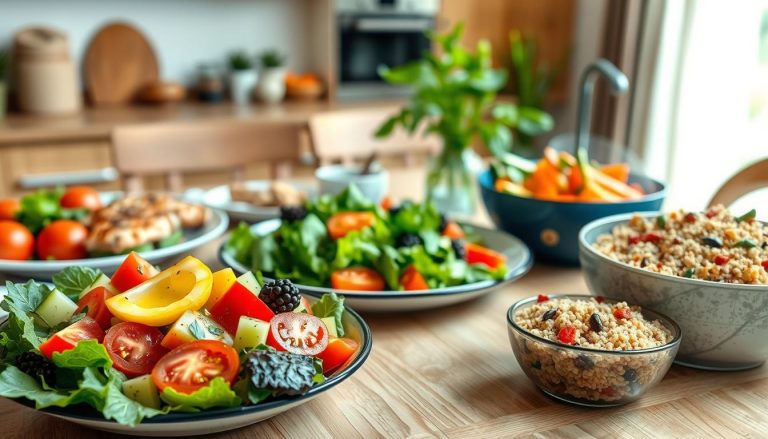
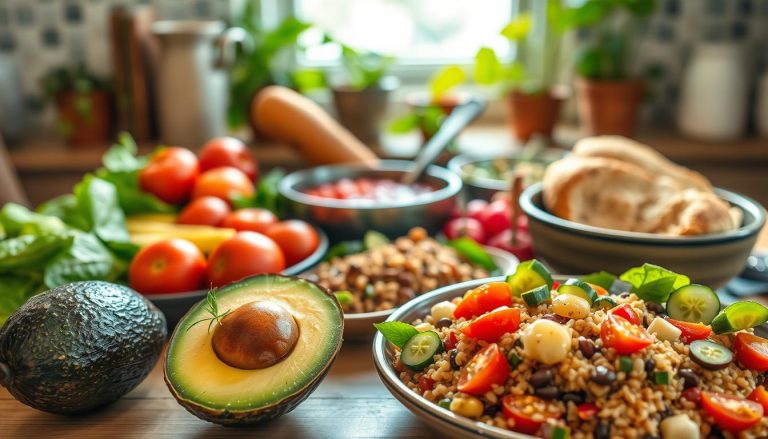
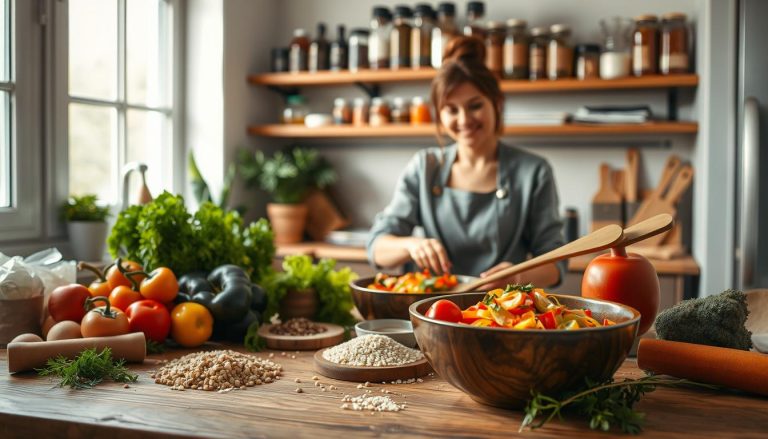
Starting eco-friendly eating habits can change your life and your family’s. Choosing recipes that care for the planet feeds your body and helps the environment.
Exploring sustainable recipes means more than just cooking. It’s a choice that brings calm and nourishment to your meals. Using simple, locally-sourced ingredients cuts down on waste and connects you to your food.
Adopting sustainable eating is a big step towards a greener lifestyle. It makes mealtime more mindful and caring. This change benefits your family’s health and the planet.
Introduction to Sustainable Eating
Sustainable eating means making choices that help you and the planet. It’s a path to a healthier life. You get to nourish your body and support the environment.
Starting this journey, it’s key to know the basics. This includes valuing sustainable ingredients, eating seasonal produce, and trying plant-based meals.
Understanding Sustainable Ingredients
Sustainable ingredients are good for the planet. They include organic foods, local items, and products with little packaging. Choosing these supports farming that’s environmentally friendly and helps nature.
Importance of Seasonal Produce
Seasonal produce is fresher and tastes great. It’s also better for the planet because it needs less transport. By picking seasonal foods, you help local farmers and cut down on carbon emissions.
Benefits of Plant-Based Meals
Plant-based meals are key to sustainable eating. They use less land, water, and energy than meat. Eating more plants can also make you healthier and lower your risk of diseases.
By following these principles, you help the planet and feed your body well. Sustainable eating connects you closer to your food and the world.
Easy Sustainable Breakfast Recipes
A sustainable breakfast is more than just food. It’s about starting your day in a way that’s good for you and the planet. By picking renewable and ethical ingredients, you help the environment. A sustainable breakfast can be as simple as making a few smart choices.
Here are some tasty and easy breakfast recipes that are good for the planet. For more ideas, check out simple pantry breakfasts for quick and green breakfast options.
Overnight Oats with Fruits and Nuts
Overnight oats are a great sustainable breakfast. They use rolled oats, a renewable resource, and can be made with seasonal fruits and nuts to reduce waste. Just mix oats with milk, add chia seeds, and top with fruits and nuts. Refrigerate overnight and enjoy in the morning.
- Use locally sourced oats and milk to reduce carbon footprint.
- Add seasonal fruits to ensure freshness and support local farmers.
- Incorporate nuts like almonds or walnuts for added crunch and nutrition.
Green Smoothie Bowl
A green smoothie bowl is a nutritious and sustainable breakfast. Blend your favorite greens with fruits and top with sustainable granola and seasonal fruits. This meal is rich in antioxidants and supports ethical farming when you choose local and organic produce.
- Choose organic spinach or kale for the greens.
- Add frozen fruits like berries or mango for natural sweetness.
- Top with sustainable granola and fresh seasonal fruits.

Avocado Toast Variations
Avocado toast is a trendy and sustainable breakfast. Avocados are a nutrient-rich food from renewable farms. To make avocado toast, mash ripe avocados and spread on whole-grain toast. Add lemon juice, salt, and pepper to taste. You can also add eggs, tomatoes, or red pepper flakes for extra flavor.
- Use whole-grain bread for a fiber-rich base.
- Top with poached eggs or cherry tomatoes for added protein.
- Experiment with different seasonings like red pepper flakes or smoked paprika.
By adding these easy sustainable breakfast recipes to your daily routine, you nourish your body and support the environment. Switch to a sustainable breakfast today and feel the positive effects on your day and the planet.
Nutritious Sustainable Lunch Options
Making sustainable choices for lunch can cut down your carbon footprint. It also helps you live healthier. Choosing meals that are good for the planet and your body is key to conscious living.
Here are some tasty and eco-friendly lunch ideas. They’re not only delicious but also help the environment:
Quinoa Salad with Roasted Vegetables
A quinoa salad with roasted veggies is nutritious and filling. Quinoa is a complete protein. Adding roasted veggies makes it a meal that’s both satisfying and sustainable. Roast your favorite veggies with olive oil and seasoning, then mix with cooked quinoa and lemon juice.
Chickpea and Spinach Wrap
A chickpea and spinach wrap is an easy and sustainable choice. Fill a whole-grain wrap with mashed chickpeas, spinach, cucumbers, and tahini sauce. It’s packed with protein and fiber. This wrap is good for you and cuts down waste by using whole-grain wraps and local ingredients.
Hearty Lentil Soup
Lentil soup is a comforting and sustainable option for lunch. Lentils are high in protein and good for the environment. They need less water and fix nitrogen in the soil. Cook lentils with veggies and spices, served with whole-grain bread for a filling meal.
These sustainable lunch options have many benefits:
- They reduce your carbon footprint by using local and seasonal ingredients.
- They promote conscious living through mindful eating.
- They support local farmers and lower transportation emissions.
- They offer nutritious meals that are good for you and the planet.
By adding these recipes to your lunch routine, you’re moving towards a greener lifestyle. Start with one or two recipes and explore sustainable eating.
Delicious Sustainable Dinner Ideas
You can make delicious, sustainable dinners that are good for the planet and tasty for your family. Dinner is a great time to try out sustainable recipes. These recipes are not only yummy but also help the environment.
Stuffed Bell Peppers with Brown Rice
Stuffed bell peppers are a colorful and nutritious dinner choice. They are perfect for sustainable cooking. By using local bell peppers, brown rice, and your favorite protein or veggies, you get a meal that’s filling and eco-friendly.
Nutritional Benefits: Bell peppers are full of vitamins, and brown rice is rich in fiber. Together, they make a healthy and sustainable meal.
Zucchini Noodles with Pesto
Zucchini noodles, or “zoodles,” are a great low-carb pasta substitute. They’re perfect for a sustainable dinner. With homemade pesto made from basil, garlic, and olive oil, this dish is tasty and good for the planet.
Environmental Impact: Choosing zucchini over regular pasta cuts down on carbon emissions. Zucchini needs less processing and transport.
Cauliflower Curry
Cauliflower curry is a versatile and nutritious dinner choice. It’s great for a sustainable eating plan. Using cauliflower and spices, you get a dish that’s delicious and full of vitamins and antioxidants.
Sustainable Practices: Cauliflower is a low-impact crop. It can be sourced locally, which reduces your meal’s environmental footprint.
| Dinner Idea | Main Ingredients | Environmental Benefit |
|---|---|---|
| Stuffed Bell Peppers | Bell Peppers, Brown Rice, Vegetables | Locally sourced ingredients reduce carbon footprint |
| Zucchini Noodles with Pesto | Zucchini, Basil, Garlic, Olive Oil | Low-carb alternative reduces processing and transportation |
| Cauliflower Curry | Cauliflower, Spices, Coconut Milk | Cauliflower is a low-impact crop |
By adding these dinner ideas to your meal plan, you enjoy tasty and healthy meals. You also support environmentally responsible cooking. Sustainable dinners like these help reduce waste and make our planet healthier.
Simple and Healthy Snacks
Healthy snacking is more than just eating. It’s a chance to feed your body and help the planet. By picking the right snacks, you keep your energy up and help the environment.
Homemade Energy Bites
Making your own homemade energy bites is a great way to snack healthily. These tasty bites are full of good stuff like oats, nuts, and dried fruits. You can make them your way, based on what you like and need.
- Mix rolled oats, nut butter, and honey in a bowl.
- Add your choice of nuts, seeds, or dried fruits.
- Roll the mixture into small balls and refrigerate until firm.
Roasted Chickpeas
Roasted chickpeas are a fantastic snack that’s good for you and the planet. They’re crunchy, tasty, and you can season them many ways. Making them at home cuts down on waste and lets you pick what goes in.
- Rinse and dry a can of chickpeas.
- Toss with olive oil and your choice of seasonings.
- Roast in the oven until crispy.
Seasonal Fruit Platter
A seasonal fruit platter is a pretty and healthy snack. Picking fruits in season helps local farmers and cuts down on transport emissions. For more healthy snack ideas, visit Love and Lemons.
- Select a variety of seasonal fruits.
- Arrange them on a platter in an attractive pattern.
- Serve as is or with a dollop of yogurt or nut butter.
Adding these easy and healthy snacks to your day improves your health and helps the planet. Snacking has never been more rewarding!
Dessert Recipes That Embrace Sustainability
You can enjoy sweet treats and help the planet at the same time. Sustainable desserts mean making choices that are good for the environment. By picking the right ingredients and methods, you can have tasty desserts that match your values.
Vegan Chocolate Avocado Mousse
This dessert is a great example of sustainable ingredients coming together. Avocados make it creamy and healthy, reducing food waste. The avocado and cocoa powder mix creates a rich, vegan, and eco-friendly treat.
Benefits: Avocados are full of healthy fats, and cocoa powder is packed with antioxidants. This dessert is both sustainable and nutritious.

Banana Bread with Whole Wheat Flour
Making banana bread with whole wheat flour makes it more sustainable. Whole wheat flour keeps more nutrients and fiber, needing less extra ingredients. Using overripe bananas also cuts down on waste, making it a smart choice.
Tip: Use local bananas and whole wheat flour to lower your carbon footprint even more.
Apple Crisp with Oat Topping
Apple crisp is a cozy dessert that’s easy to make green. Oats for the topping are nutritious and better for the planet. They need less water to grow than many grains. Apples are also a good choice because they’re often local and come from sustainable farms.
Advantage: You can customize this dessert with your favorite apples and spices. It’s perfect for any event.
Tips for Practicing Sustainable Cooking
Starting a journey in sustainable cooking is good for the planet and makes cooking more fun. Simple steps can greatly reduce your carbon footprint and support conscious living.
Plan Your Meals
Meal planning is key to cutting down on food waste and saving time. It helps you make a list and buy only what you need. This way, you avoid wasting food. Check out the CHEF iQ blog for tips on cooking sustainably.
Efficient Cooking Methods
Using smart cooking tools like the CHEF iQ Smart Thermometer and Smart Cooker makes cooking better for the planet. These tools help you cook just right, saving energy and food. They ensure your meals are cooked perfectly.
Support Local Communities
Buying from local farmers and markets is another great way to cook sustainably. It cuts down on transportation emissions and supports local businesses. This approach is good for the environment and builds community.